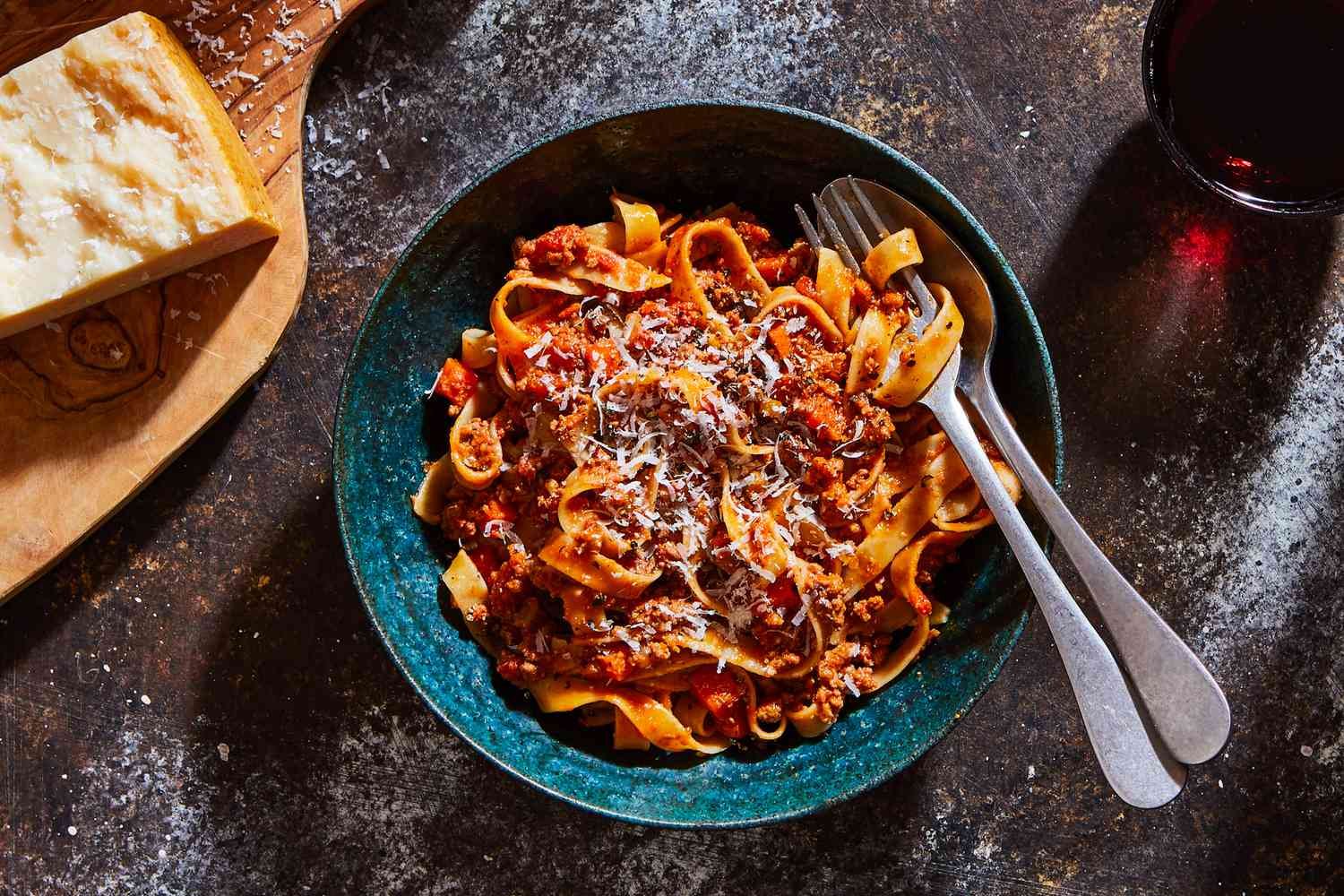
When one speaks of classic Italian cuisine, few names command as much respect and admiration as Marcella Hazan. Her recipes have guided generations of home cooks toward authentic Italian flavors, emphasizing simplicity, balance, and deep respect for ingredients. Among all her creations, none is more beloved or iconic than her Bolognese sauce. Known in Italy as Ragù alla Bolognese, this rich and slow-simmered meat sauce epitomizes what Hazan stood for: patience, tradition, and the quiet magic of cooking from the heart.
The Legacy of Marcella Hazan
Marcella Hazan was born in 1924 in the town of Cesenatico, along Italy’s Adriatic coast. Trained in natural sciences, she never intended to become a culinary figure. Her journey into cooking began only after she moved to New York with her husband, Victor Hazan, who encouraged her to share her knowledge of Italian food. In an America dominated by heavy, tomato-drenched versions of “Italian” dishes, Hazan became a revolutionary voice for authenticity.
Through her books, particularly The Classic Italian Cook Book and Essentials of Classic Italian Cooking, she reintroduced the world to Italy’s regional dishes. Each recipe reflected her belief that Italian food is about precision and respect for ingredients, not shortcuts or excess.
The Anatomy of Her Bolognese
Marcella Hazan Bolognese is not just a recipe—it’s a slow act of devotion. The sauce takes hours to prepare, demanding care at every stage. Yet, the results justify every minute spent stirring, simmering, and coaxing flavor from humble ingredients.
At first glance, the ingredient list seems modest: onions, carrots, celery, ground meat (usually beef and pork), milk, wine, tomatoes, butter, and salt. There is no garlic, basil, or oregano—none of the stereotypical “Italian” touches common in Americanized versions. The simplicity is intentional. In Hazan’s kitchen, each ingredient has a purpose, contributing subtlety rather than dominance.
Her method begins with finely chopped aromatic vegetables—onion, carrot, and celery—gently sautéed in butter or oil until soft and fragrant. Then comes the meat, cooked slowly until it loses its raw color and releases its natural juices. Next, the milk is added, a surprising step to many cooks. The milk tenderizes the meat and balances the acidity of the tomatoes added later. Only after the milk evaporates does she pour in the wine, allowing its sharpness to cook off before adding a small amount of tomatoes.
The sauce then simmers for at least three hours, sometimes longer, stirring occasionally. This long cooking time transforms the mixture into a silky, rich sauce where meat, vegetables, and tomato melt into one another.
A Study in Patience
The beauty of Hazan’s Bolognese lies in its refusal to rush. Modern cooking often celebrates speed, but Hazan’s approach teaches something deeper: flavor takes time. As the sauce simmers gently, the milk’s sweetness softens the acidity of the tomato, while the meat releases its richness into the sauce.
She cautioned cooks never to drown the sauce in tomatoes or rely on heavy seasoning. The focus should always remain on the meat. In her words, “The most characteristic element of Bolognese is the absence of a pronounced tomato flavor.” This philosophy redefines how many people understand pasta sauces, shifting the emphasis from the tomato to the slow fusion of all elements.
Choosing the Right Pasta
Marcella Hazan also insisted on pairing the right pasta shape with her Bolognese. She was adamant that this sauce was not meant for spaghetti, a belief shared by most Italians from Bologna. Instead, she recommended tagliatelle, pappardelle, or fettuccine, broad, flat noodles that hold the thick sauce beautifully.
She wrote that the texture of egg-based pasta complements the richness of Bolognese better than the smooth, slippery surface of spaghetti. For those outside Italy, Hazan often suggested fresh pasta or high-quality dried alternatives made from durum wheat. The key was to create harmony between sauce and noodle—neither overpowering the other.
Why It Matters
Hazan’s Bolognese has become more than a recipe; it represents a culinary philosophy rooted in authenticity and care. In a world of instant meals and pre-packaged sauces, her method reminds us that cooking can be an act of mindfulness. Every ingredient has meaning, and every step, no matter how slow, contributes to something larger.
When people first try her Bolognese, they often find the flavor surprisingly gentle compared to heavy restaurant versions. Yet, this subtlety is its strength. The sauce does not shout it whispers. It lingers on the palate, revealing layers of flavor developed through time and attention.
A Recipe Passed Through Generations
Part of Marcella Hazan’s lasting influence comes from how her recipes connect people. Many cooks around the world have memories of making her Bolognese on a quiet Sunday, the house filled with the comforting aroma of simmering sauce. Some have passed the recipe down to children or grandchildren, not just as a cooking technique, but as a family ritual.
Her instructions often included small, almost poetic touches. She would advise cooks to “listen” to the sauce as it simmered, to “let it smile” in the pot, meaning a gentle bubbling that signifies perfect heat. These phrases elevated cooking from a mere task to an experience, a sensory, intuitive process.
The Role of Tradition
In Bologna, the birthplace of ragù, each family has its own version, often guarded and cherished. Marcella Hazan’s version captures the spirit of these traditions while remaining accessible to home cooks worldwide. She did not claim her Bolognese was the only authentic one—rather, it was her interpretation, informed by Italian heritage and adapted for international kitchens.
In 1982, the Accademia Italiana della Cucina even registered an official recipe for Ragù alla Bolognese, which mirrors many aspects of Hazan’s version: slow cooking, the use of milk, minimal tomato, and a combination of meats. This alignment underscores her commitment to authenticity.
Modern Adaptations
While purists stick faithfully to Hazan’s original instructions, many cooks have found creative ways to adapt her recipe. Some add pancetta for extra depth, others substitute veal or use plant-based meat alternatives while keeping her method intact. Even vegetarian adaptations aim to honor her balance of flavors, replacing meat with lentils or mushrooms.
What remains unchanged, however, is the spirit of the dish: slow, mindful cooking that respects the harmony of ingredients.
The Enduring Appeal
Marcella Hazan’s Bolognese endures because it speaks to something timeless. It isn’t about culinary trends or exotic ingredients; it’s about transforming simple, everyday components into something extraordinary through care and patience. In a way, it’s a metaphor for life: the most rewarding outcomes often come from consistency, attention, and love.
To make Hazan’s Bolognese is to participate in a legacy that spans generations. Each pot that simmers on a modern stove connects back to centuries of Italian culinary tradition and to the quiet kitchen in Venice where Hazan first tested her recipes for an American audience.
Conclusion
Marcella Hazan’s Bolognese is more than a sauce; it is a story of culture, patience, and culinary artistry. It reflects her lifelong mission to bring authentic Italian cooking to the world and to teach that true flavor comes not from complexity, but from understanding the essence of ingredients.
In the end, her Bolognese reminds us that cooking is not just about feeding the body—it’s about nourishing the soul. Every slow stir, every patient hour of simmering, carries forward her legacy of simplicity, integrity, and love for good food. And as long as kitchens everywhere continue to fill with the aroma of her ragù, Marcella Hazan’s spirit will continue to live on, one spoonful at a time.
Next Article
Nintendo 64 in 2025: A Legacy Reborn