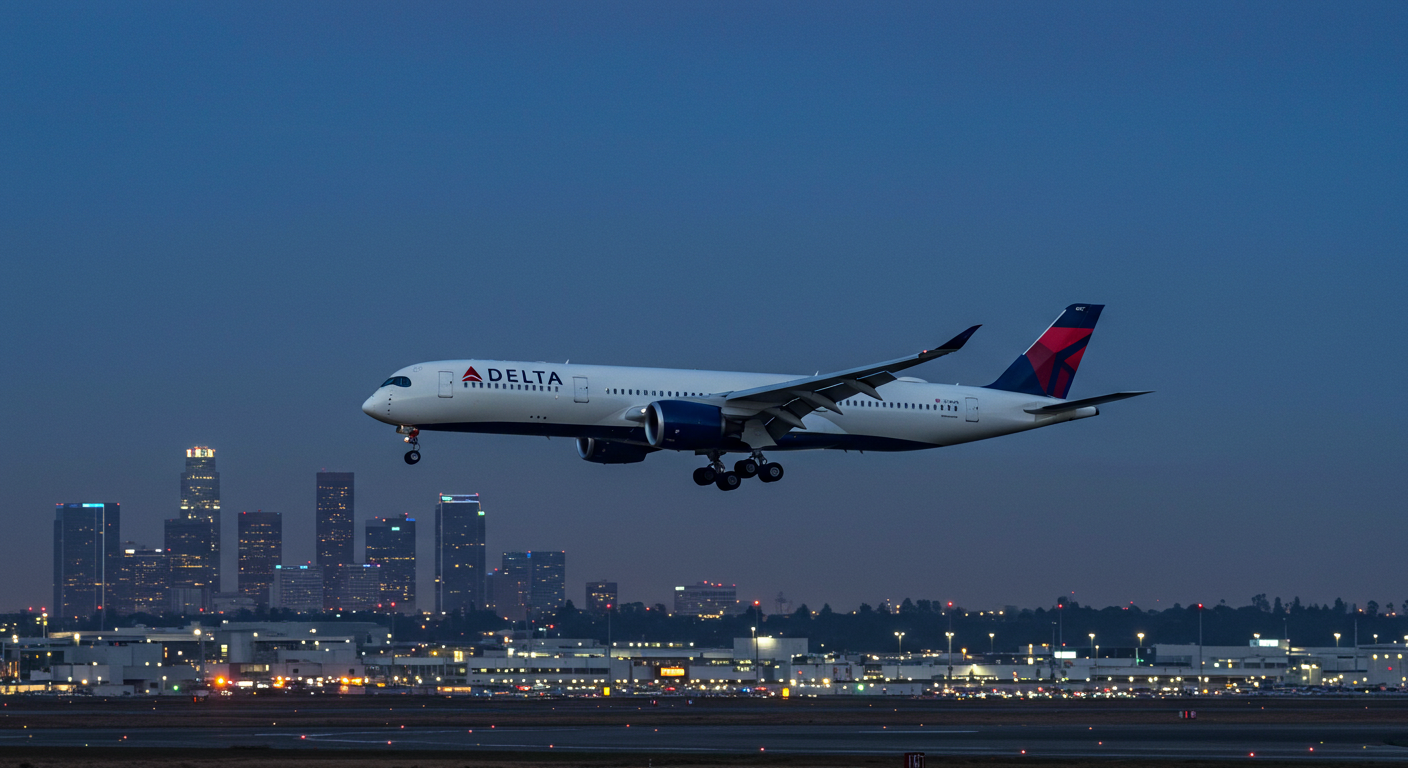
Delta Air Lines Flight DL275, traveling from Detroit Metropolitan Wayne County Airport to Tokyo Haneda Airport, was unexpectedly diverted to Los Angeles International Airport (LAX) after a technical issue occurred mid-flight. The incident, which took place on May 28, 2025, serves as a reminder of aviation’s strict safety protocols and the importance of decisive action in long-haul operations. Despite the diversion, the aircraft landed safely, and no injuries were reported among passengers or crew.
The Flight and Decision to Divert
Delta Flight DL275 departed from Detroit on schedule, heading toward Tokyo on a long transpacific route that typically spans more than thirteen hours. The flight was operated by an Airbus A350-900, one of the airline’s newest and most advanced wide-body jets. Midway through the journey, while cruising at an altitude of around 38,000 feet, the flight crew detected a technical issue in one of the plane’s engine anti-ice systems.
The anti-ice system is critical in preventing ice buildup on engine components when aircraft fly through cold, moist air at high altitudes. Ice accumulation can significantly impact engine performance, reduce thrust, or even lead to engine stall. Although the system’s failure did not pose an immediate threat to the flight’s safety, the crew followed standard aviation protocol by deciding to divert to a suitable airport before crossing vast oceanic areas where emergency landing options are limited.
After consulting with Delta’s operations center and air traffic control, the pilots chose to divert to Los Angeles International Airport. LAX was selected because of its long runways, advanced maintenance facilities, and Delta’s significant operational presence there. The aircraft began its descent toward California and landed safely around 1:08 a.m. local time.
Understanding the Technical Issue
The Airbus A350 is powered by Rolls-Royce Trent XWB engines, known for their fuel efficiency and sophisticated control systems. Each engine includes an anti-ice mechanism that circulates hot air or uses electric heat to keep essential components free from ice. When sensors or valves in this system malfunction, it can trigger cockpit warnings that prompt pilots to take precautionary measures.
In this case, a suspected fault in the engine’s anti-ice system was detected. While the situation was under control, the crew could not risk continuing across the Pacific Ocean without access to maintenance or diversion airports. The decision to divert ensured that technicians could inspect and resolve the issue before the aircraft resumed service.
Upon landing at LAX, maintenance crews conducted a detailed inspection. The aircraft remained on the ground for several hours while technicians replaced and tested affected components. After confirming that the system was fully operational, the jet was cleared for service return.
Passenger Experience and Crew Response
For the passengers onboard, the diversion came as an unwelcome surprise during what was meant to be a smooth international journey. However, reports from those on the flight indicate that the cabin crew and pilots handled the situation with professionalism and calmness. The captain informed passengers about the nature of the diversion, explaining that it was a precautionary measure to ensure everyone’s safety.
Flight attendants maintained a composed atmosphere, continuing service where possible and assisting passengers with questions and concerns. Although some travelers expressed frustration over delays and missed connections, most acknowledged that the crew’s communication helped keep anxiety levels low.
Once the aircraft landed safely in Los Angeles, Delta’s ground staff quickly assisted passengers with rebooking options, hotel accommodations, and meal vouchers. Some travelers were placed on the next available flights to Tokyo, while others were rerouted through different connecting hubs. Despite the inconvenience, there were no reports of injuries or significant distress among passengers.
Why LAX Was the Best Option
Choosing Los Angeles as the diversion airport was a strategic decision. Several factors made LAX the most suitable option under the circumstances:
-
Maintenance Capabilities: LAX has one of Delta’s largest maintenance facilities on the West Coast, allowing the airline to diagnose and repair complex aircraft issues efficiently.
-
Runway Length and Infrastructure: The airport’s long runways can accommodate heavy, long-haul aircraft landing with excess fuel—something not all airports can handle safely.
-
Hub Operations: As a Delta hub, LAX has sufficient resources to assist stranded passengers, from ticketing to baggage handling and customer care.
-
Passenger Convenience: Being a major international gateway, Los Angeles offers abundant options for hotel stays, onward connections, and amenities for travelers.
-
Proximity to the Flight Path: Given the aircraft’s position at the time of the incident, diverting to LAX required less fuel and time than other alternatives.
This combination of safety, practicality, and passenger service made Los Angeles the ideal choice for the emergency landing.
Safety First: The Aviation Perspective
While diversions can cause significant inconvenience, they are often a sign of a strong safety culture rather than operational failure. In modern aviation, safety decisions are based on the principle of precaution—if something doesn’t seem right, pilots are trained to err on the side of caution.
Delta Air Lines, like other major carriers, has strict procedures for handling in-flight technical issues. Pilots receive extensive training in how to assess risks, manage aircraft systems, and coordinate with operations control centers. The Delta flight dl275 diverted lax diversion highlights how these systems function together to ensure the safety of everyone onboard.
Such events also demonstrate the value of redundancy in aircraft design. Modern jets like the Airbus A350 are equipped with multiple backup systems that allow continued safe flight even when certain components fail. However, the presence of a fault in a critical system—especially one tied to engine performance—requires immediate attention.
Impact and Aftermath
After the safe landing at LAX, Delta’s maintenance teams carried out necessary repairs and inspections. The aircraft reportedly remained grounded for nearly a full day before being cleared for its next flight. For passengers, Delta arranged rebookings and provided support for onward travel, fulfilling its obligations under customer care policies.
The airline later confirmed that the issue was mechanical and that the diversion was made purely out of caution. The event received attention across aviation forums and social media, where enthusiasts and passengers alike praised the crew’s professionalism and Delta’s quick handling of the situation.
For Delta Air Lines, this incident reinforced its commitment to operational safety and transparency. The company continues to emphasize that diversions, though costly and disruptive, are critical to maintaining trust and safety in commercial aviation.
Lessons and Takeaways
Several important lessons emerge from this incident:
-
Safety Over Schedule: The decision to divert underscores the priority of human life over punctuality or cost.
-
Importance of Communication: Effective communication between pilots, air traffic control, and passengers helps manage stress and expectations.
-
Modern Technology’s Role: Aircraft systems can detect faults long before they become dangerous, allowing proactive responses.
-
Resilient Operations: Major airlines maintain the resources to handle diversions smoothly, minimizing disruption for travelers.
Conclusion
The diversion of Delta Flight DL275 from Detroit to Tokyo was an unexpected event that ended safely and professionally. A potential engine anti-ice issue prompted the pilots to make the prudent decision to land at Los Angeles International Airport, where passengers were safely accommodated and the aircraft received necessary maintenance.
While diversions like this may seem alarming, they are in fact proof that aviation safety systems work as intended. Every decision, from the cockpit to the ground team, prioritized safety above all else. In the end, all passengers arrived safely—an outcome that reaffirms the reliability and discipline that define modern air travel.