In recent months, the Connections Hint search trend has exploded as players across the world try to solve one of The New York Times’ most addictive and challenging games — Connections. If you’ve ever been stuck trying to find the hidden relationships between words, you’re not alone. This daily word puzzle tests not only your vocabulary but also your ability to think logically and spot subtle patterns. Let’s dive deep into what Connections is, how it works, and how to use smart hints to win consistently.
What Is the Connections Game?
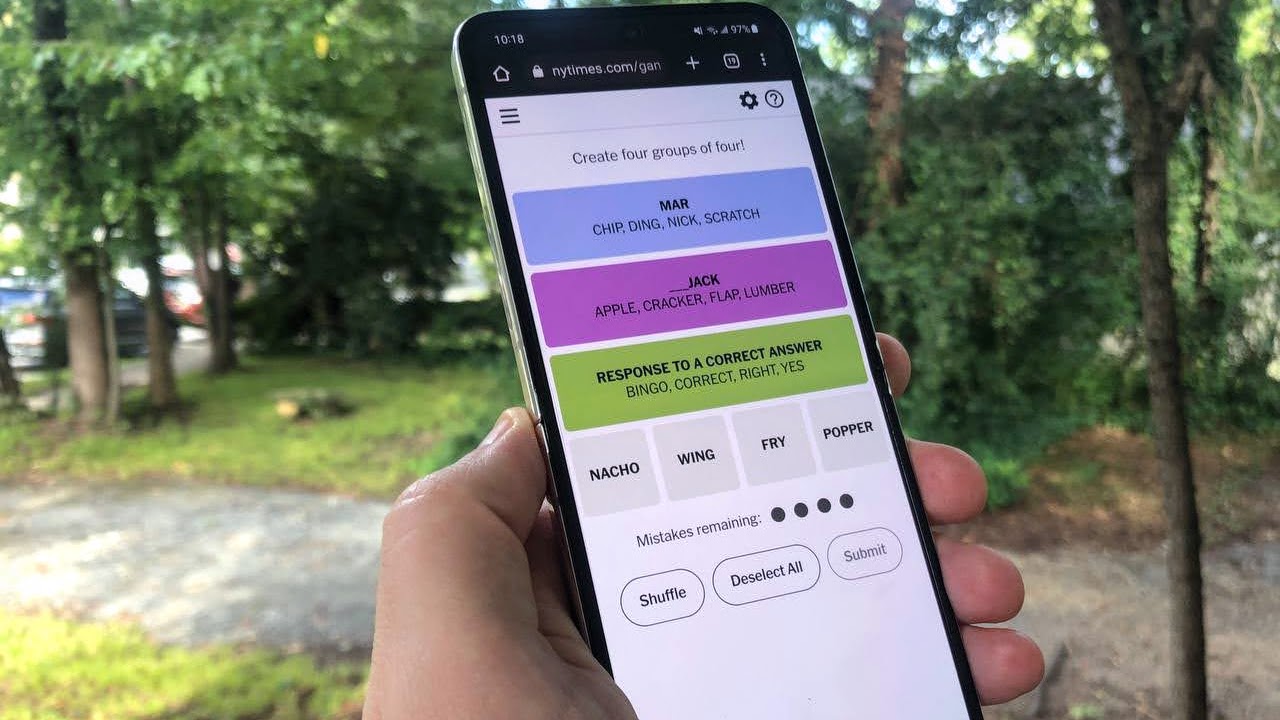
Connections is a daily puzzle game from The New York Times, developed by the same team behind Wordle and Spelling Bee. The premise is simple yet mentally stimulating: players are given 16 words, and their goal is to group them into four sets of four words that share a common connection.
Each group has a unique category, such as:
-
Colors (e.g., Red, Blue, Green, Yellow)
-
Movie Titles (e.g., Titanic, Avatar, Inception, Joker)
-
Synonyms (e.g., Fast, Quick, Rapid, Speedy)
-
Themes (e.g., Winter Holidays, Musical Instruments, or Sports Teams)
While the idea seems easy, the execution can be tricky. The puzzle is notorious for misleading overlaps, where multiple words seem to fit more than one category, and that’s where the connections hint becomes invaluable.
How to Play Connections
To play Connections, visit The New York Times Games section and look for the daily challenge. You’ll see 16 tiles, each displaying a word. The goal is to:
-
Identify four related words.
-
Select them and submit.
-
If you’re right, those words are cleared from the board and categorized by color:
-
Yellow: Easy
-
Green: Medium
-
Blue: Hard
-
Purple: Tricky
-
You only get four mistakes, so accuracy matters. This design keeps the game suspenseful and rewarding — especially when you solve the final set.
What Does a “Connections Hint” Mean?
A connection hint is a small clue or subtle suggestion that helps players spot the relationship between words. It doesn’t reveal the exact answer but nudges you in the right direction.
For example, if the puzzle includes words like Mercury, Venus, Mars, and Jupiter, a connections hint might be “Celestial bodies” or “Planets in our solar system.”
Hints can be:
-
Category-based clues (e.g., “Types of fabric”)
-
Thematic clues (e.g., “Related to the kitchen”)
-
Word association clues (e.g., “You might find these in a garden”)
These hints are essential for players who want a little help without spoiling the fun of discovery.
Why Players Search for “Connections Hint” Daily
Millions of players now search “Connections hint for today” because they want just enough help to avoid frustration. The game refreshes every day at midnight, and communities online — especially on Reddit, Twitter (X), and puzzle blogs — share hints to guide others.
People love the balance between challenge and reward. Unlike Wordle, which focuses on guessing a single word, Connections requires group reasoning, making it both social and analytical.
For many, searching for hints is a way to keep learning and improve cognitive flexibility. It’s not cheating — it’s strategic puzzle-solving.
How to Use Hints Effectively
If you’re someone who doesn’t want to give up but still needs a little push, here’s how to make the most of Connections hints:
-
Use the hint after identifying one or two groups.
-
Once you’ve cleared some words, the hint helps you focus on what’s left.
-
-
Read the hint carefully.
-
A single word like “animals” might seem broad, but it could refer to zodiac signs or mythical creatures instead.
-
-
Think outside the box.
-
Connections often rely on cultural or linguistic references — movies, idioms, or brands.
-
-
Avoid overusing hints.
-
The real joy comes from the “aha!” moment of solving it yourself. Use hints only when you’ve exhausted your logical options.
-
-
Discuss with others.
-
Sharing hints and theories with friends or online communities can enhance your experience and deepen your reasoning skills.
-
Common Connection Categories to Look For
Getting better at Connections means understanding the common patterns the creators use. Here are some frequently used categories that can guide your thinking:
-
Synonyms or antonyms (e.g., small/tiny/minuscule/petite)
-
Thematic links (e.g., “Board Games” like Clue, Risk, Monopoly, Life)
-
Wordplay or puns (e.g., “Words that sound like animals”)
-
Cultural references (e.g., “Marvel characters” or “Oscar-winning films”)
-
Hidden meanings (e.g., “Words that can follow ‘Ice’ — Ice Cream, Ice Cube, Ice Age, Ice Skater”)
Recognizing these categories helps you predict what kind of connections may appear and use hints more intelligently.
Tips to Improve Your Connection Skills
Want to become a pro without depending on hints? Try these strategies:
-
Scan for obvious sets first.
-
Identify easy or thematic links like months, colors, or fruits.
-
-
Eliminate distractions.
-
If one word seems to fit multiple categories, leave it for later.
-
-
Use the process of elimination.
-
Every solved group narrows the field, helping you spot subtler connections.
-
-
Pay attention to tricky overlaps.
-
The creators intentionally add deceptive overlaps. Don’t rush — think twice before grouping.
-
-
Practice daily.
-
Like Wordle, consistency builds pattern recognition and word association skills.
-
-
Engage with the community.
-
Discussing puzzles on Reddit or Discord can help you understand new logic patterns and cultural references.
-
Why Connections Is More Than Just a Game
Connections isn’t just a brainteaser; it’s a mental exercise that enhances cognitive performance. By analyzing word relationships, players strengthen skills like:
-
Critical thinking
-
Pattern recognition
-
Linguistic flexibility
-
Memory retention
For educators, psychologists, and language lovers, Connections represents a powerful example of gamified learning using fun to stimulate logic and language mastery.
It also encourages social interaction, as players compare scores or hints online, fostering community and collaboration. Whether played solo with a coffee or competitively among friends, the game’s design encourages reflection, curiosity, and creativity.
Final Thoughts
The Connections Hint isn’t just about finding shortcuts; it’s about enhancing your problem-solving journey. Every hint acts as a stepping stone, helping you uncover the relationships between words while sharpening your reasoning abilities.
As the game continues to trend worldwide, more players are discovering how addictive and educational it can be. So next time you’re stuck, don’t feel bad about searching for a Connections hint — use it strategically, learn from it, and get ready for that satisfying rush when you finally solve the puzzle.